Every roofer gets the same pitch a dozen times a year: "Pay us $50 a lead," or "Spend $3,000/month on Google Ads and we'll keep your crews busy." Sometimes that works. But it's expensive, the lead quality is a coin flip, and the second you stop paying, the phone stops ringing.
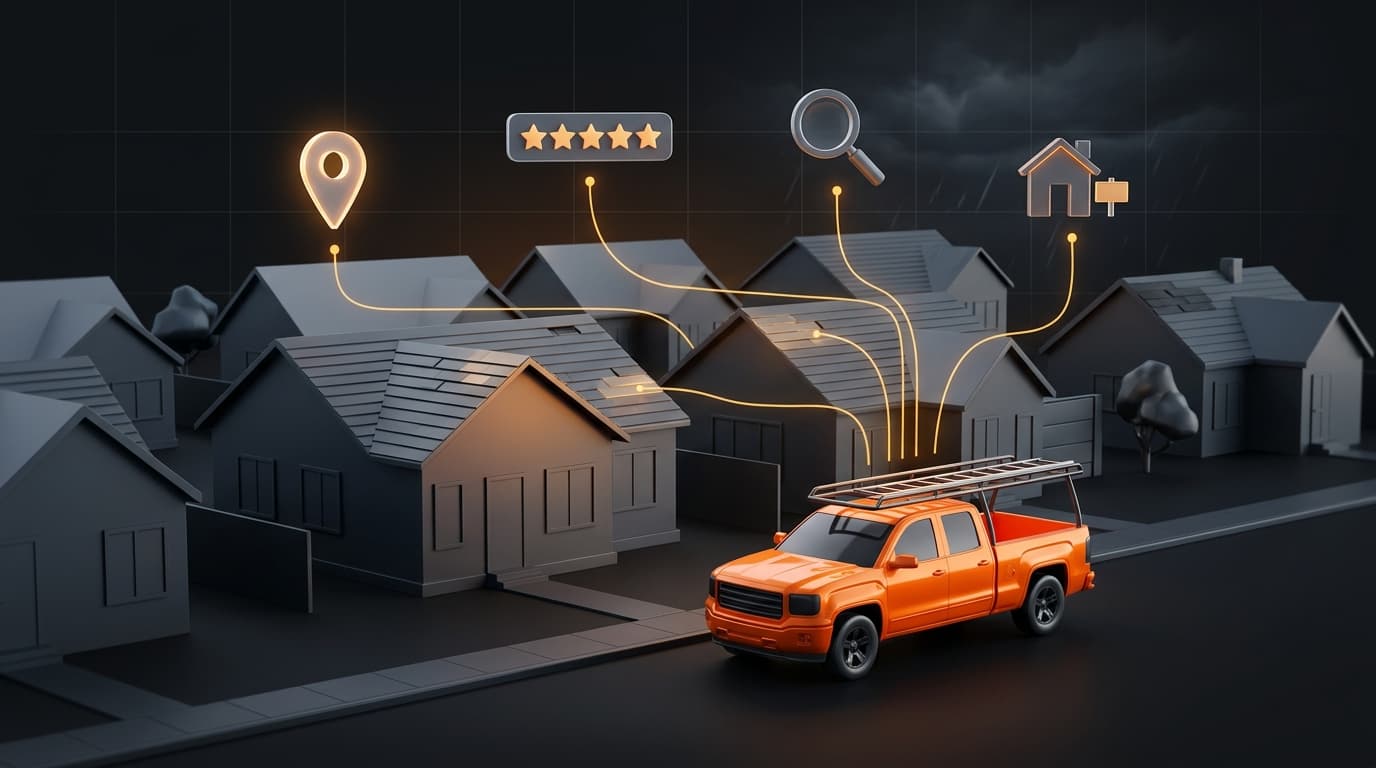
The good news: roofing is one of the best trades on the planet for generating leads without paying for ads — if you play the channels that actually move for roofers. This isn't a generic "post on social media" listicle. This is a roofing-specific playbook built around how people actually find a roofer.
Why roofing leads are different
Roofing isn't like most trades. Demand is event-driven — a hailstorm, a wind event, a leak during the first heavy rain of the season. People don't shop for a roofer for months; they need one now, often with insurance involved. That changes everything about how you get found.
So the whole strategy below is built around three roofing realities:
- Weather creates sudden, geographic spikes in demand.
- Insurance is usually in the mix, which means trust and documentation matter more than price.
- Roofs are visible — your work and your yard signs are seen by every neighbor.
Lean into those three things and you don't need to rent leads.
1. Own storm-season local SEO
When a storm rolls through, hundreds of people in a specific area all search the same things within days: "roof repair near me," "storm damage roof," "hail damage roofer [town]." The roofers who show up at the top of those searches book out their crews. The ones who don't, buy ads to compete.
To win storm-season search:
- Build location pages for the towns you serve. Not one generic "service area" page — a real page for each key town or county, with local landmarks, common roof types, and storm history. When the storm hits that town, you're already the local result.
- Publish fast after a weather event. A short, genuinely helpful post — "What to do after hail damage in [Town]" — published within a day or two of a storm catches the search spike while it's hot.
- Make sure your site is technically built to rank. Speed, mobile, and proper local markup decide whether you show up at all. (If that sounds abstract, here's the plain-English version: what LocalBusiness schema is and why your roofing site needs it.)
This is exactly what we build into a roofing website by default — the location structure and on-page foundation that lets you rank when the weather creates demand.
2. Turn your Google Business Profile into a storm magnet
Your Google Business Profile (the listing with your map pin, reviews, and photos) is the single highest-leverage free tool a roofer has. After a weather event, it's where local demand goes first.
- Post to it constantly during storm season. Photos of recent jobs in the affected area, with the town named, signal to Google that you're active and local right where the demand is.
- Pile up location-specific reviews. A review that says "fixed our hail damage in Cedar Park fast" is worth ten generic five-star reviews, because it ties you to a place and a problem.
- Add fresh job photos weekly. Before/after roof shots are some of the most clicked images in local search. Keep them coming.
- Keep your service area and hours accurate, especially the emergency/after-hours availability homeowners need after a leak.
The profile is free. The only cost is consistency — and most of your competitors aren't consistent.
3. Build the insurance referral loop
Here's the channel ad-buyers ignore: roofing runs on insurance, and insurance runs on relationships. A roofer who's easy to work with on claims becomes the name that gets passed around.
- Get tight with local independent insurance agents. They constantly field "my roof is damaged, who do I call?" questions. Be the roofer they trust to make them look good to their clients. One good agent relationship can feed you steady, pre-qualified work.
- Make adjusters' lives easy. Clear documentation, good photos, professional measurements. Adjusters remember the contractors who don't create headaches.
- Ask every insurance customer for a referral while the gratitude is fresh — they tell their neighbors, who often have the same storm damage.
This loop costs nothing and compounds over time. It's the opposite of paid leads, which evaporate the moment you stop paying.
4. Win the neighborhood effect
Roofs are public. When you re-roof one house, the whole street knows there was a roofer there — especially after a storm when everyone suspects they have damage too.
- Set an A-frame sign on the street next to your truck. This is the one most roofers skip, and it's the most powerful. A yard sign sits back on the lawn where half the street never notices it. An A-frame sandwich board planted at the curb next to your truck is right at eye level for every car that drives by and every neighbor walking the dog — impossible to miss. During an active install in a storm-hit neighborhood, that A-frame is a billboard pointed directly at hundreds of people who all suspect they have damage too. Keep one in every truck and set it out on every job.
- Use yard signs too — but as the backup, not the headline. A yard sign on the finished home is still worth planting (with the homeowner's okay), and it keeps working after you leave. Just don't rely on it to catch traffic the way the curbside A-frame does.
- Knock the neighbors (the right way). After you land a job, let the adjacent homeowners know you'll be working on the street and offer free inspections. You're already there; the marginal cost is zero.
- Cluster your routing. Booking nearby jobs close together isn't just efficient — it concentrates your visibility and word-of-mouth in one area.
5. Make reviews and referrals systematic, not random
Most roofers "get around to" asking for reviews. The ones who win make it automatic.
- Ask for the review at the moment of peak happiness — right after the cleanup, when the homeowner is thrilled and the yard is spotless. Send the Google review link by text before you pull off the driveway.
- Have a simple referral offer and actually mention it. Roofing referrals are gold because neighbors share contractors after storms.
- Respond to every review, good or bad. It signals to both Google and future customers that you're engaged and professional.
What ties it all together
Notice the thread through all five: every one of these channels runs through your website and your Google presence. Storm-season SEO needs location pages that rank. The neighborhood effect sends people to your site to check you out. Insurance referrals get Googled before anyone calls. Reviews show up next to your site in search.
If your site is slow, generic, or — worse — a rented template you don't even own, you're leaking all of this free demand. A roofer's site has to load fast, work on a phone in someone's driveway, show your real work, and be built to rank locally. That's the entire point of how we build roofing websites: owned by you, built to convert storm-season traffic into booked jobs, with no monthly fee bleeding your margins.
The bottom line for roofers
You do not have to rent leads to stay busy. Roofing rewards the contractors who own their local search, work the insurance relationships, and turn every job into the next three through reviews, signs, and neighbors. Paid ads can supplement that — but they should never be your lead strategy, because the day you stop paying is the day you go quiet.
Build the free channels first. They compound. Ads don't.
If you want a roofing site built to actually capture this demand — fast, owned outright, no monthly fees — here's what it costs, and here's how we build for roofers specifically. Questions about your specific market? Let's talk.
Ready for a website that actually gets calls?
One flat fee. No monthly costs. Free hosting forever.
See Pricing